
 Search
 Get started
 03 9730 1128
 Account
 Cart
Cart


12 Minute(s) read
A great lawn starts well before the first roll of turf hits the ground. From choosing the right time of year to preparing your soil and watering your new lawn, every step can affect how quickly your turf establishes.
The good news is that laying turf yourself is achievable with the right preparation. These laying turf tips take you through the process step by step, with practical advice for Melbourne conditions. You'll learn how to prepare your lawn area, lay turf correctly and care for it while the roots establish.
When is the best time to lay turf in Melbourne?
Spring and early autumn are generally the best times to lay turf in Melbourne. The combination of mild weather and warmer soil helps new turf establish without the added stress of extreme heat.
However, you can still lay turf at other times of the year. The key is adjusting your watering and lawn maintenance to suit the conditions. Whenever you're looking to lay turf, check the forecast and, where possible, avoid installation during extreme weather.
Laying turf in spring and autumn
Spring is an ideal time for laying your turf because rising soil temperatures encourage active root and grass growth. Your new lawn also has time to establish before the hottest summer weather arrives.
Early autumn is another good option. The soil retains summer warmth, while cooler days can reduce moisture loss. This gives the turf an opportunity to establish before growth slows through winter.
Whichever season you choose, have your lawn area prepared before the turf arrives. Fresh turf should be laid as soon as possible after delivery rather than being left on a pallet.
Laying turf in summer and winter
You can install turf in the summer, but it can dry out quickly on hot days. Prepare the area beforehand, lay the turf promptly and water each section as you work. During particularly warm weather, you may need to water your lawn more frequently throughout the establishment period.
Winter installation is also possible, although your turf may take longer to establish as growth slows. Keep the soil adequately moist and limit unnecessary foot traffic while the roots develop.
The best approach is to consider the weather, your chosen turf type and how much care you can provide after installation.
Preparing to lay turf

Good preparation makes laying turf easier and helps give your new lawn the best start. Before ordering, measure your turf area, choose a suitable grass variety and organise the equipment you'll need.
It's also worth completing as much preparation as possible before delivery. That way, your quality turf can go down promptly rather than sitting in rolls or slabs while you finish the job.
Measure how much turf you need
Start by measuring the length and width of your lawn area in metres. Multiply these figures to calculate the area in square metres.
For irregular spaces, divide the lawn into smaller rectangles or squares and calculate each section separately. Add the results together to find your total turf area.
Allow a little extra turf for cutting and fitting around garden beds, paths and other edges. This can also cover small measurement differences or unusable offcuts.
If you're unsure how much turf to order, Lilydale Instant Lawn's turf calculator can help you estimate the amount required. Once you've calculated how much you need, order your turf and arrange delivery.
Choose the right turf for your lawn
The best lawn isn't necessarily made with the same turf type as your neighbour's. Consider how much sunlight your lawn receives, how it will be used and how much maintenance you want to put into it.
Lilydale supplies several turf varieties suited to different Victorian lawns.
These include:
For example, Sir Walter is a popular all-round option, while Sir Grange offers a fine-leaf appearance with different maintenance requirements. Comparing each grass variety before ordering can help you choose the correct turf for your property.
Have the right equipment for the job
Having your tools ready before the turf arrives can make installation much easier.
Depending on the job, useful equipment may include a wheelbarrow, rake, garden hose, lawn roller, shovel and sharp spade. A sharp knife or spade will also help when you need to cut the turf neatly around an edge.
You'll need suitable soil-preparation products, too. Turf underlay soil and starter fertiliser may form part of the preparation process, which we'll cover in the next section.
Get everything ready before delivery so you can move straight from ground preparation to laying your turf.
How do you prepare the ground before laying turf?
Proper preparation of the ground gives newly laid turf the foundation it needs to establish itself. Remove existing vegetation, improve the soil where required and create a smooth, even surface before installation.
Taking the time to prepare the area can also make laying easier and help ensure the turf develops good contact with the soil.
Clear, test and level the soil
Start by removing old grass, weeds, rocks and other debris from the area. If weeds are present throughout the lawn, treat them before laying turf and follow the product directions.
Next, assess your soil. A pH test can help identify whether adjustments are required before you lay your new lawn. Turf generally performs best when the soil provides suitable drainage, nutrients and growing conditions. See Agriculture Victoria’s soil testing guide for more details.
Loosen compacted ground and level the area with a rake. Remove high spots and fill low areas to create a smooth surface without hollows where water could collect.
Allow for the thickness of your turf when setting the final soil level beside paths, driveways and other hard surfaces.
Add turf underlay and starter fertiliser
Where required, spread suitable turf underlay across the prepared ground. Turf underlay can improve the growing environment and help create an even surface for installation.
Level the underlay thoroughly, then lightly compact it to create a firm base. You want a smooth surface that supports the turf without leaving large soft spots or air pockets underneath.
Apply starter fertiliser according to the product directions before laying. This provides nutrients to support the turf during its early establishment period.
Once you've finished, give the prepared area a final check. It should be level, adequately moist and ready for turf delivery and installation.
Can you lay turf over existing grass?
For the best result, don't lay new turf directly over an existing lawn. Old grass and its root layer can prevent the new turf from making good contact with the soil underneath.
Instead, remove the existing grass and prepare the soil before laying. This gives the new roots direct access to the prepared soil and creates a more consistent foundation.
Removing the old lawn also gives you an opportunity to treat weeds, correct uneven areas and improve the soil before starting again.
How to lay turf step by step

With the preparation complete, you're ready to start laying your turf. This step-by-step guide to laying turf covers how to position, fit, roll, and water your new lawn to help it establish.
Start with a straight edge and stagger the seams
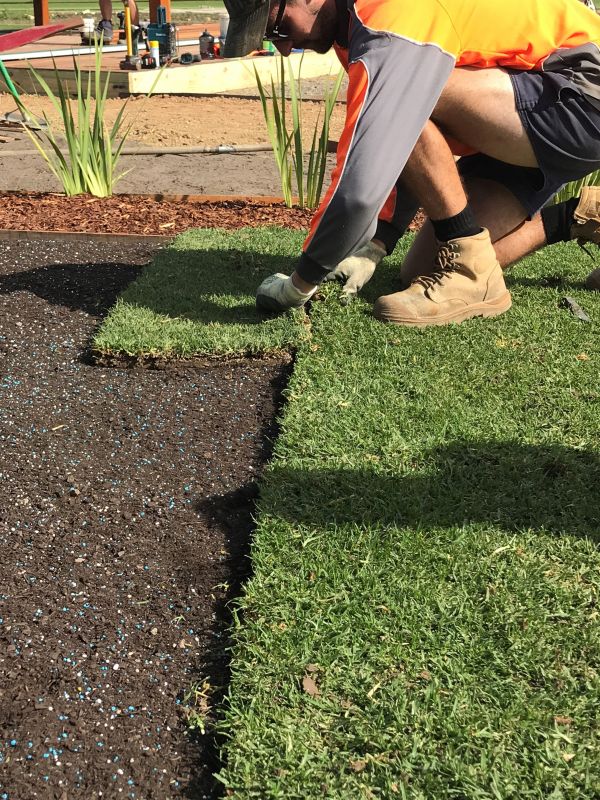
Step 1: Begin laying along a straight edge, such as a driveway, path or boundary. Place each piece closely against the next without stretching or overlapping the turf.
Step 2: Stagger the joins as you work, laying the turf in a brickwork pattern. Avoid lining up the ends of neighbouring rolls or slabs, as staggered seams create a more consistent finish.
Step 3: If you're laying on sloping ground, lay the turf across the slope rather than straight down it. Fit each piece firmly against the previous one as you work. Position each piece firmly against the previous one as you continue across the turf area.
Cut, fit and roll the turf
Step 4: Cut the turf neatly around garden beds, paths and other obstacles using a sharp knife or spade. Avoid using lots of small pieces where possible, particularly around exposed edges where they can dry out quickly.
Step 5: Once an area is laid, roll the turf to ensure good contact with the prepared soil and help remove air pockets underneath.
Work carefully as you go. If you need to lift a piece to reposition it, do so before rolling rather than stretching it into place.
Water immediately after laying
Step 6: Water each section thoroughly as soon as it is laid. Don't wait until you've finished the entire lawn, especially when installing turf in warm or dry weather.
Step 7: Once installation is complete, check that the turf and soil beneath are thoroughly moist. Continue watering according to the weather, as it is important not to let the turf dry out during its establishment period.
Getting these installation steps right is one of the easiest ways to give your new lawn a strong start.
Watering and caring for your new turf
The first few weeks after installation are important for your new lawn. Consistent watering, careful mowing and limited foot traffic will help the roots establish.
Your exact care routine will depend on your turf variety, the weather and the time of year. Keep an eye on your lawn and adjust your maintenance as conditions change.
How often to water new turf
Water your turf immediately after laying, then keep both the turf and underlying soil consistently moist during establishment.
Check the lawn regularly rather than relying on a fixed schedule. Hot, dry or windy weather can increase water demand, while cooler conditions may mean you need to water less often.
As the roots establish, gradually reduce watering frequency and encourage deeper root growth. Avoid allowing newly laid turf to dry out during this early stage.
When and how to mow new turf
Wait until your turf has started taking root before its first mow. You can check this by gently lifting a corner. If there is resistance, the roots are beginning to establish. During the warmer months, the first mow could be required within the first week.
Make sure your mower blades are sharp and avoid removing too much leaf in one mowing. Keeping the lawn slightly longer during establishment can reduce stress while the root system develops.
Once established, follow the recommended mowing height for your chosen turf variety.
Fertilising your new turf
If you applied starter fertiliser during preparation, your lawn already has nutrients to support early growth.
Avoid rushing to fertilise again immediately. Once your turf is established, follow a lawn fertilising program suited to the grass variety and season.
Regular feeding can support healthy growth and help get your lawn looking its best over the long term.
Managing foot traffic and extreme weather
Keep foot traffic to a minimum while your new lawn establishes. Walking, playing and placing heavy objects on newly laid turf can disturb the developing roots and create uneven areas.
Take extra care during extreme weather. In hot conditions, check moisture levels more frequently and make sure the turf doesn't dry out. During periods of heavy rain, avoid unnecessary traffic across saturated ground.
A little extra care during establishment can make ongoing lawn maintenance easier and give your turf a stronger foundation.
How long does new turf take to establish?
New turf can begin developing roots within the first few weeks, but there isn't one set establishment time for every lawn. Your turf variety, season, soil preparation, watering and local conditions can all affect how quickly it takes root.
An easy way to check is to gently lift a corner of the turf. If you feel resistance, the roots are starting to take hold in the soil. Avoid pulling firmly, as this can disturb new root growth.
Continue following the recommended watering and mowing routine while the lawn establishes. Even when the turf looks healthy above ground, its root system may still be developing beneath the surface.
Giving your lawn enough time to establish before heavy use will help create a stronger foundation for ongoing growth.
Create your best lawn with Lilydale Instant Lawn
A great lawn starts with choosing the right turf and providing the right preparation, installation, and care.
Lilydale Instant Lawn grows a range of premium turf varieties for homes across Melbourne and Victoria. Whether you're replacing an old lawn or starting from scratch, our team can help you choose a turf variety suited to your property and lifestyle.
Once you've found the right turf, use our turf calculator to work out how much you need and arrange delivery to your property. Then follow this guide to prepare, lay and care for your new lawn.
Ready to get started? Explore our turf varieties or contact Lilydale Instant Lawn for help choosing the best lawn for your home in Australia.